The Mouth Gut Connection: Why Oral Health Matters More Than You Think
Why Your Oral Health Matters More Than You Think
When people think about digestion they usually picture the stomach and intestines. But digestion doesn’t start there, it begins in your mouth.
Your mouth is the first step of your digestive system. The process starts the moment you take a bite of food. Chewing mechanically breaks food down, while saliva contains enzymes that begin digesting carbohydrates before food even reaches your stomach. If this first step isn’t functioning well, everything downstream is affected.
The Mouth Gut Connection
Your mouth is home to billions of bacteria, both beneficial and harmful. When your oral microbiome is balanced, it supports overall health. When harmful bacteria overgrow, they don’t just stay in your mouth. Every time you swallow, this overgrowth of harmful bacteria travels from your mouth into your digestive tract.
This means:
Poor oral hygiene can introduce harmful bacteria into the gut
Imbalances in the mouth can contribute to gut dysbiosis
Inflammation in the gums can influence systemic inflammation, including in the digestive system
The good news is, daily habits play a big role here. Simple practices like tongue scraping, flossing, brushing with a high-quality toothpaste, and maintaining consistent oral care can help support a healthier oral microbiome. Pair that with a whole foods based diet and you’re not just supporting your mouth, you’re supporting your gut health as well.
In simple terms: A healthy mouth helps support a healthy gut.
What You Put in Your Mouth Matters
Most conventional oral care products contain ingredients you probably wouldn’t, (or shouldn’t) choose to ingest regularly. Even if you’re not actually swallowing your toothpaste, let’s be honest… small amounts still make their way into your system over time, especially for kids.
But here’s the part most people don’t think about: your mouth is also highly absorbent. Your gums can allow certain compounds to pass into the bloodstream, meaning those toothpaste ingredients don’t just stay on the surface. When you brush your tongue (which you should), you’re working with one of the most absorbent areas in the body, increasing that exposure even more. So it’s not just about what you’re “not swallowing,” it’s about what your body is still taking in. That’s why being a little more intentional with your oral care products actually matters.
A Better Approach to Oral Care
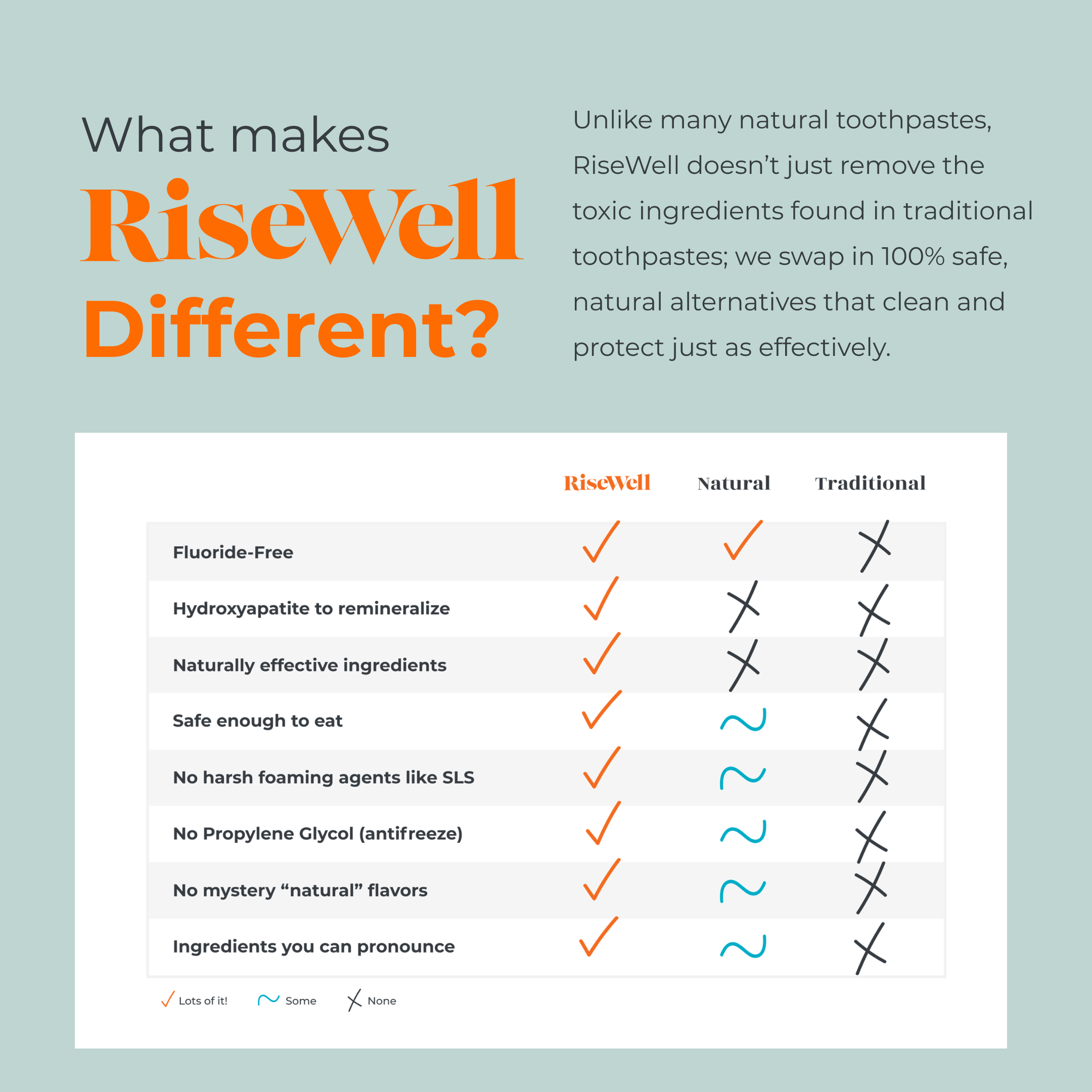
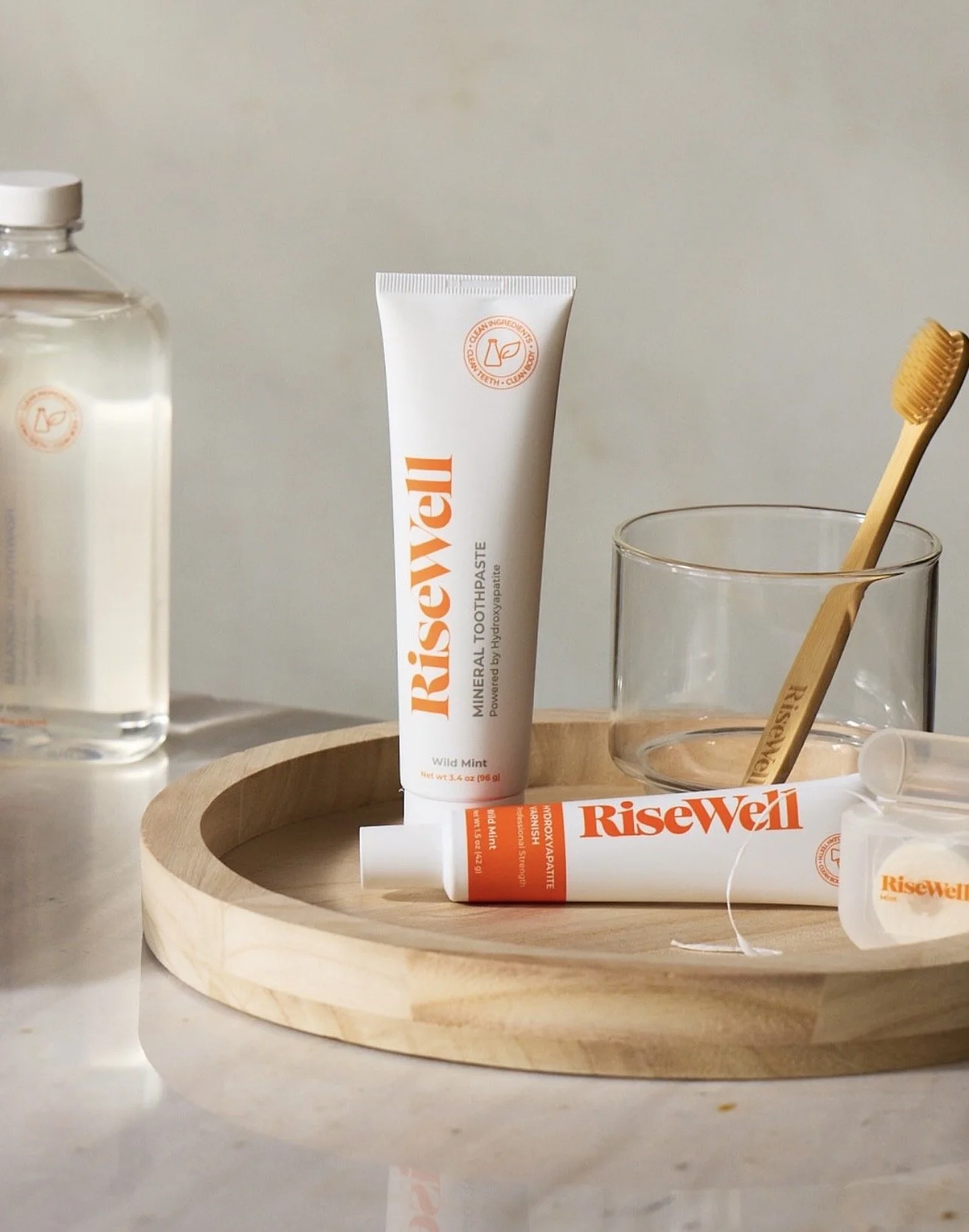
I’m proud to say we’ve partnered with a company called RiseWell. Their products take a different approach to oral health care.
Their formulas are powered by hydroxyapatite, a naturally occurring mineral that makes up your teeth. It works by:
Remineralizing enamel (helping rebuild and strengthen teeth)
Gently cleaning the surface (without harsh abrasives)
Prevents decay and cavities (without using harmful chemicals)
Because hydroxyapatite restores and remineralizes the teeth over time, it can also lead to a natural whitening effect, not by bleaching, but by improving enamel quality.
Their products are also:
Dentist-developed and recommended
Third-party tested for quality and safety
Non toxic, made with no harmful additives
Food-grade, so you don’t have to worry about accidental swallowing
Studies have shown hydroxyapatite can be just as effective as fluoride in supporting enamel and helping prevent cavities, without some of the concerns people have around fluoride usage over time.
Inhibits bacteria that cause cavities
When bacteria has no food source, it can't produce the acids that lead to cavities. And that's exactly what Xylitol, a naturally occurring alcohol found in most plant material, does in our natural hydroxyapatite toothpaste, our balancing mouthwash, scrubby floss and a-HA mints. It starves harmful bacteria of their food source, preventing the production of acid that causes cavities.
Backed by Research
Hydroxyapatite isn’t just a trend, it’s actually been studied for decades.
In fact, some of the earliest clinical research was conducted in Japan in the 1980s, where hydroxyapatite toothpaste was tested for its ability to reduce cavities in kids. Following these trials, the Japanese government officially approved hydroxyapatite as an anti-cavity ingredient in 1993, based on its effectiveness in real-world use.
More recent clinical studies have continued to support these findings. Research shows that hydroxyapatite:
Remineralizes enamel by depositing minerals directly into weakened areas
Can be as effective as fluoride in preventing cavities and reversing early decay
Helps restore enamel surface and improve smoothness, which contributes to a naturally whiter appearance over time
Because hydroxyapatite is the same mineral that makes up your tooth enamel, it works with your body to help remineralize and protect your teeth.
Exclusive Offer
If you’re looking to upgrade your oral care routine:
You can get 10% off with code: HOUSEOFWELLNESS